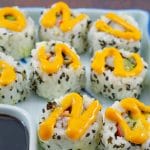
📋 Homemade California Rolls (Sushi) Recipe
This simple, healthy and delicious Homemade California Rolls (sushi) appetizer recipe with cucumber, imitation crab, avocado, Nori seaweed, rice and black sesame and sriracha mayonnaise is fun, easy to make and Weight Watchers friendly!
Servings 36 rolls
Calories 61kcal
Cost .50 per roll
Equipment
- sushi mat
Ingredients
- 1 cucumber, sliced into thin sticks
- 2 avocados, thinly sliced
- ½ -16 oz pkg imitation crab meat (leg style)sliced in half, lengthwise
- 4 sheets Nori seaweed sheets, cut in half, lengthwise about ½ of a 21 g bag
- 4 teaspoon black sesame seeds *approximately
Sushi rice
- 2 cups short grain rice
- 2 cups water
- 2 tablespoons rice vinegar
- 2 tablespoons sugar
- ½ teaspoon sea salt
Garnish:
- Sriracha Mayonnaise * I buy this but you can make it

Instructions
Sushi Rice:
- PREP: Rinse your rice! This is important. (see NOTES at the bottom of the recipe card).
- Place the rice and 2 cups of water into a medium saucepan and place over high heat. Bring to a boil, uncovered. Once it begins to boil, reduce the heat to the lowest setting and cover. Cook for 15 minutes. Remove from the heat and let stand, covered, for 10 minutes.2 cups short grain rice, 2 cups water
- Combine the rice vinegar, sugar and salt in a small bowl and heat in the microwave on high for 30 to 45 seconds. Transfer the rice into a large wooden or glass mixing bowl and add the vinegar mixture. Fold thoroughly to combine and coat each grain of rice with the mixture. Allow to cool to room temperature before using.2 tablespoons rice vinegar, ½ tsp sea salt, 2 tablespoons sugar
California Rolls:
- Cut Nori seaweed sheets in half, and place on a sushi rolling mat. Add ⅔ cups rice spreading evenly, pressing down onto seaweed so that it sticks.4 sheets Nori seaweed sheets, cut in half, lengthwise
- Sprinkle on some black sesame seeds (about a tsp), then flip it over. * Don't worry it will flip over very easily and the rice will stick!4 tsp black sesame seeds
- Add 2 pieces of crab leg, 2-3 slices of cucumber and about 4 pieces of avocado.1 cucumber, sliced into thin sticks, ½ -16 oz pkg imitation crab meat (leg style)sliced in half, lengthwise, 2 avocados, thinly sliced
- Start to roll with the end closest to you, as shown in VIDEO HERE: How to roll a California Roll.
- Once tightly rolled, cut evenly into pieces and serve!
Garnish:
- Add Sriracha mayo as desired.Sriracha Mayonnaise
Notes
🎥 Video
How to roll a California Roll: Although a bamboo mat is used in this video, I prefer to use a silicone mat (see EQUIPMENT). The process/technique is the same, but you don't have to cover the mat in plastic wrap if you use silicone, and you can throw it right in the dishwasher!
Recipe Tips:
- Perfect the Sushi Rice Texture: Ensure the rice has cooled to body temperature before rolling so it doesn't make the nori soggy.
- Deseed the Cucumber for Extra Crunch: Remove the watery center of the cucumber with a spoon before slicing it into matchsticks to prevent excess moisture from making your roll soft or rubbery. If you're using long English cucumbers, you really don't have to do this, as the seeds are so unnoticeable, they are often called 'seedless'.
- Pre-Season Your Crab Filling: Instead of using plain crab, shred the meat and toss it with a small amount of sriracha mayo and a squeeze of lime before assembly to ensure every bite is flavorful and creamy.
- Toast the Black Sesame Seeds: Lightly toast your sesame seeds in a dry pan for about a minute before using them to release their natural oils and add a deeper, nutty aroma to the outside of your roll.
- Maintain a Clean, Sharp Knife: Use your sharpest knife and wipe the blade with a damp cloth between every single cut to prevent the starchy rice from sticking to the metal and tearing the nori.
- Use Plastic Wrap for Precision Slicing: Wrap your finished roll tightly in plastic wrap before cutting to help it maintain its shape, and consider leaving the plastic on while you slice to keep the sesame seeds and fillings perfectly in place.
- Select the Ideal Avocado Ripeness: Use an avocado that is firm but gives slightly to pressure—similar to the feel of the tip of your nose—to ensure it holds its shape during rolling while still providing a buttery texture.
Ingredient Changes and "Skimpflation" in Sushi Making
If you find that your sushi rolls aren't holding together as well as they did years ago, it is likely due to "skimpflation"—a trend where manufacturers alter ingredient formulas to save costs. Since 2019, several staple sushi ingredients have changed in quality, affecting the structural integrity of homemade rolls.- Rice Grain Shifts: Many brands now label "Medium Grain" rice as "Sushi Rice" or use grain blends to keep prices stable. Medium grain contains less starch than traditional Short Grain rice, resulting in a less "sticky" texture that can cause rolls to fall apart. To fix this, ensure you are buying "Grade A Short Grain" and rinse it until the water is perfectly clear so the remaining starch remains tacky rather than mushy.
- Increased Moisture in Imitation Crab: Modern imitation crab often contains more water and starch fillers than in the past. This extra moisture creates a "slip layer" inside the roll, causing the fillings to slide out when sliced. To prevent this, pat your imitation crab dry with a paper towel before placing it on the nori to give the rice a better grip.
- Thinner Nori Sheets: Seaweed sheets have become thinner and more brittle over the last few years. These thinner sheets absorb moisture from the rice too quickly, becoming leathery and losing the firm "skeleton" needed to maintain a tight cylinder. You can compensate for this by working quickly and using the "Double Squeeze" technique: wrap the finished roll in plastic and give it one final, firm squeeze with the mat to set the shape.
- Lower Sugar in Seasoned Vinegars: Store-bought "Seasoned Rice Vinegar" has seen formula shifts that often include less sugar than previous years. Because sugar acts as the "glue" that binds the rice grains, a lower sugar content leads to loose rice. Making your own seasoning (Sushi-zu) allows you to control the tackiness; if your rice feels loose, add an extra teaspoon of sugar to your vinegar mixture.
Nutrition
Calories: 61kcal | Carbohydrates: 10g | Protein: 1g | Fat: 1g | Sodium: 35mg | Potassium: 73mg | Fiber: 1g | Vitamin A: 20IU | Vitamin C: 1.4mg | Calcium: 4mg | Iron: 0.6mg
