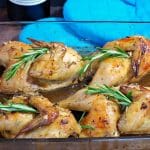
📋 Cornish Hens with Rosemary Wine Sauce Recipe
These Easy Baked Cornish Hens recipe with Rosemary Wine Sauce are the perfect date night recipe, Valentine's day, birthday dinner, Thanksgiving dinner, Christmas dinner or fancy enough for a dinner party. This recipe is also economical, simple, easy to make, Weight Watchers friendly and can be made in advance.
Servings 4 servings
Calories 64.11kcal
Ingredients
- 2 1 lb Cornish hens ½ per person
- 1 cup dry white wine * you can use any type (it doesn't have to be expensive wine)
- ⅓ cup white wine vinegar
- 2 tablespoon low- sodium soya sauce
- 1 teaspoon dried rosemary
- ¼ teaspoon dried thyme
- 4 cloves garlic, minced
Garnish
- fresh rosemary sprigs (optional)

Instructions
- Preheat oven to 350 degrees F. Spray a 9X13 pan with non-stick cooking spray
- Remove and discard giblets and necks from hens. Rinse hens under cold water and pat dry. Split each hen in half lengthwise.
- Partially remove the backbone from the middle
- Cutting from each side
- Place hens, meat side up, in a shallow roasting pan.
- Whisk together wine, white wine vinegar, soya sauce, rosemary, thyme and garlic in a separate bowl, then pour over hens. *Cover the hens' legs with a little aluminum foil to prevent burning (this can also be done during the cooking process, if you start to see them browning faster than the rest of the hen)
- Bake uncovered (preferably on roast if you have a convection oven) for 50 - 60 minutes basting occasionally, as you would a chicken or turkey; just spoon the sauce over the hens to baste. Cook until juices run clear and hens are cooked inside (no longer pink).
- Serve warm (½ a hen per person) with a spring of fresh sprigs of rosemary and lemon wedges, if desired.
Notes
Expert Recipe Tips:
- Use the right wine for the best flavor. A dry white wine such as Sauvignon Blanc, Pinot Grigio, or Vinho Verde gives the sauce brightness without overpowering the hens. Avoid sweet wines, which can make the sauce taste unbalanced.
- Dry the hens thoroughly before roasting. Patting the hens dry—especially after splitting them—helps the skin brown more evenly and prevents steaming.
- Split the hens fully for quicker, more even cooking. Removing the backbone and cutting the hens in half helps them roast faster and more uniformly, reducing the risk of undercooked areas around the legs and thighs.
- Remove the backbone for safer, easier eating. Cornish hens have very small bones, so removing the backbone before roasting not only helps the hens cook more evenly but also prevents diners from encountering tiny, hard-to-see bones. It’s quick and simple to do—just follow the step-by-step instructions
- Don’t skip covering the legs with foil. The legs brown faster than the breast, so a small piece of foil prevents burning while the rest of the bird finishes roasting.
- Baste regularly for maximum flavor. Spoon the rosemary wine sauce over the hens every 15–20 minutes. This not only builds flavor but also keeps the meat juicy.
- Use an instant-read thermometer for perfect doneness. Cornish hens are small and can overcook quickly. Pull them from the oven when the thickest part of the thigh reaches 165°F/74°C.
- Make it ahead for stress-free entertaining. You can fully cook the hens earlier in the day, refrigerate them with their sauce, and reheat gently in the oven. This makes them ideal for holiday meals or dinner parties.
- Let the sauce reduce slightly before serving. If you want a richer, more concentrated flavor, pour the cooked sauce from the pan into a small pot and simmer it for 3–5 minutes before spooning it over the hens.
- Garnish wisely for visual impact. Fresh rosemary sprigs, lemon wedges, or a sprinkle of parsley add brightness and elevate the presentation with almost no effort.
- Choose sides that soak up the sauce. Rice, mashed potatoes, roasted potatoes, or crusty bread all work beautifully with the rosemary wine sauce, maximizing flavor and minimizing waste.
Nutrition
Serving: 0.5hen | Calories: 64.11kcal | Carbohydrates: 3.17g | Protein: 1.27g | Fat: 0.11g | Saturated Fat: 0.03g | Cholesterol: 0.51mg | Sodium: 508.19mg | Potassium: 73.71mg | Fiber: 0.14g | Sugar: 0.76g | Vitamin C: 0.94mg | Calcium: 10.83mg | Iron: 0.6mg
