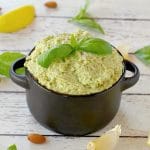
📋 Basil Pesto with Almonds recipe
This Basil Pesto with almonds is made without pine nuts. It's healthy, delicious and makes a great sauce for pastas and pizza, a spread for bagels and sandwiches and a great mix-in for dips, meatballs and salad dressing. It's also quick and easy to make, as well as more economical and convenient than using pine nuts.
Servings 12 servings
Calories 117kcal
Equipment
Ingredients
- ½ cup olive oil
- ½ cup raw whole almonds
- ⅔ cup fresh basil leaves
- 1 whole lemon, juiced (use all the juice from the entire lemon)
- ¼ cup water
- 2 cloves fresh garlic
- ½ teaspoon salt
- ¼ teaspoon pepper
- 2 tablespoon parmesan cheese

Instructions
- Add all ingredients to the bowl of a food processor and blend until smooth.½ cup olive oil, ½ cup raw whole almonds, ⅔ cup fresh basil leaves, 1 whole lemon, juiced, ¼ cup water, 2 cloves fresh garlic, ½ tsp salt, ¼ tsp pepper, 2 tbsp parmesan cheese
- Add to pasta, sandwiches, dips etc... Keep refrigerated.
Notes
Expert Recipe Tips:
- Use the freshest basil possible – Basil loses flavor quickly after picking, so use it the same day if you can. Fresh leaves will also give the pesto its brightest green color.
- Toast almonds for extra flavor – While raw almonds keep the flavor lighter, lightly toasting them in a dry skillet for 3–4 minutes adds depth and warmth to the pesto. Just let them cool before blending.
- Control the texture – For a smoother, creamier pesto, blend longer. For a chunkier, more rustic style, pulse until just combined.
- Add oil gradually – If you want a thicker pesto for spreading, start with less olive oil and add more until you reach your desired consistency.
- Season at the end – Parmesan is naturally salty, so taste your pesto after adding it before adjusting salt levels.
- Prevent browning – Store with a thin layer of olive oil over the top or press plastic wrap directly onto the surface to slow oxidation.
- Chill the blade & bowl – If you want maximum color retention, refrigerate your food processor blade and bowl before making the pesto to keep the basil cooler during blending.
- Save pasta water – If serving with pasta, reserve a little of the cooking water. Mixing it in with the pesto helps it cling better to the noodles.
- Batch & freeze – Make a double batch in summer when basil is plentiful, freeze in ice cube trays, then thaw small portions as needed.
Nutrition
Serving: 2tablespoon | Calories: 117kcal | Carbohydrates: 2g | Protein: 1g | Fat: 12g | Saturated Fat: 2g | Cholesterol: 1mg | Sodium: 110mg | Potassium: 45mg | Fiber: 1g | Sugar: 1g | Vitamin A: 58IU | Vitamin C: 1mg | Calcium: 28mg | Iron: 1mg
