


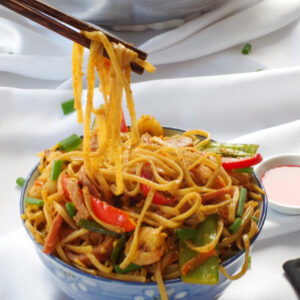
I worked in a Chinese restaurant called the Mandarin back in the very early 1990s, and that experience is where I first fell in love with Singapore Fried Rice Noodles. While I learned the basics of how to make these delicious Singapore-style Noodles there, the exact proportions of that "secret sauce" stayed behind when I left. It took me quite a few tries at home to get that perfect balance of savory, sweet, and curry-spiced heat!
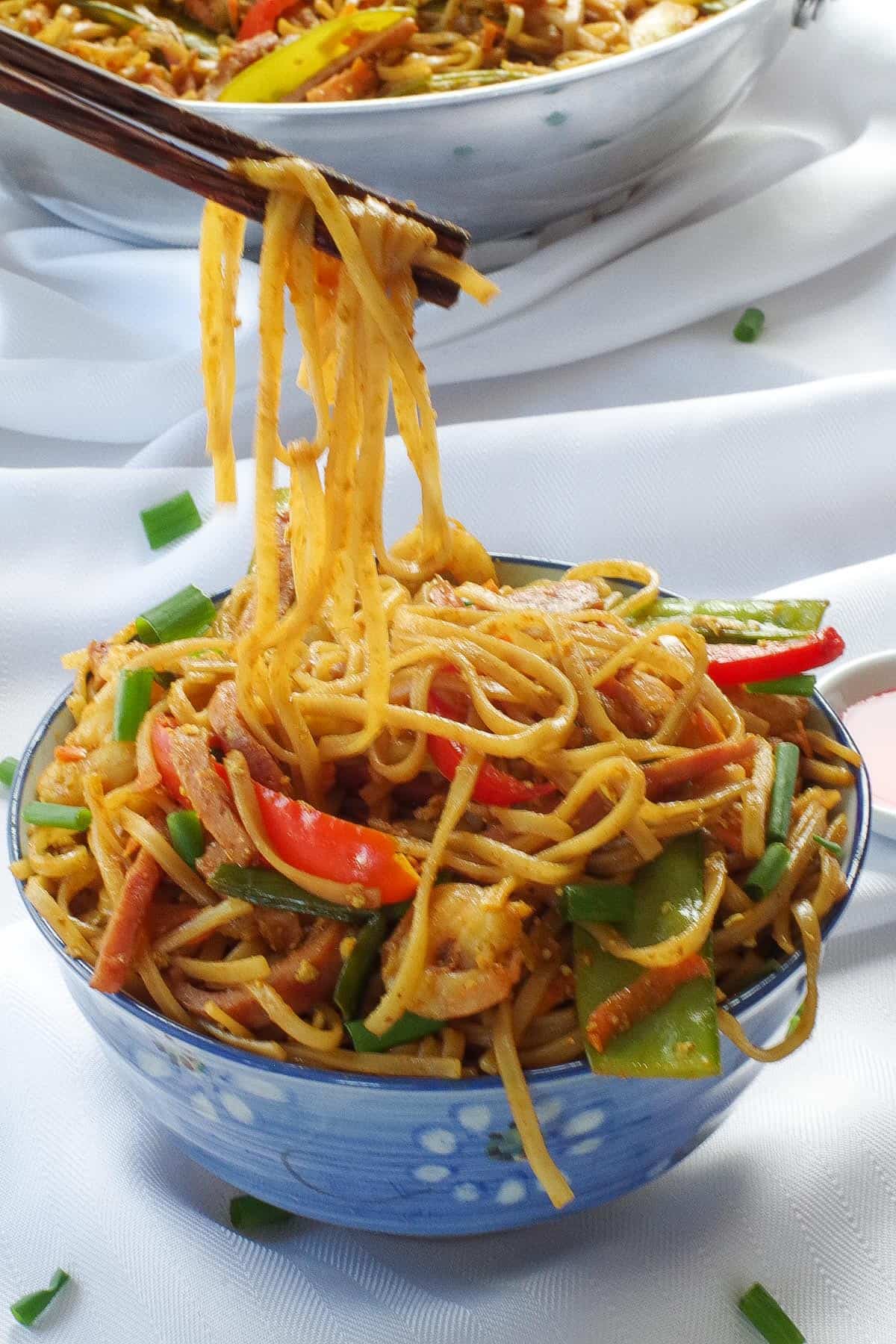
None of the homemade recipes I found online tasted anywhere NEAR the restaurant-quality noodles I remembered from my early days working Mandarin or eating this dish at The Ginger Beef Restaurant in Calgary. After my son requested these for his birthday, I was finally able to nail the recipe! These Singapore Style Fried Noodles are a family favorite year-round, but they are especially spectacular as a Chinese New Year side dish. They are dairy-free, fast to prep, and pair perfectly with my Calgary Ginger Beef and my Potsticker Dumplings!
Jump to:
- Recipe Overview: Singapore Fried Rice Noodle
- Summarize and Save this Content on:
- 🥘Ingredient Notes
- 📖Variations & Substitutions
- 🔪Step-by-Step: Instructions for Making Singapore Fried Noodles
- Expert Recipe Tips
- 🌡️Storage & Freezing
- 👪 Serving Size
- 🔢WW Points
- Recipe FAQs
- Didn't find the answer you're looking for?
- More Asian-inspired Recipes
- Comments & Reviews
- Singapore Fried Rice Noodles Recipe
Recipe Overview: Singapore Fried Rice Noodle
- Ready In: 40 minutes
- Serves: 8
- Calories: 231 kcal (approximately)
- Main Ingredients: rice noodles, shrimp, ham and vegetables
- Dietary info: Dairy-free
- Difficulty: Easy
- Why You'll Love It: This spectacular dairy-free stir-fry delivers authentic restaurant-quality flavor in just 40 minutes with a zesty curry kick.
Summarize and Save this Content on:
🥘Ingredient Notes
The original Singapore Fried Noodles have Char Sui, but that is a whole other complicated recipe to make, and unless you go to Chinatown, you're not likely to find it in any grocery store (except an Asian Grocery such as T&T). That's why I substituted ham.
You will need the following ingredients for this recipe:
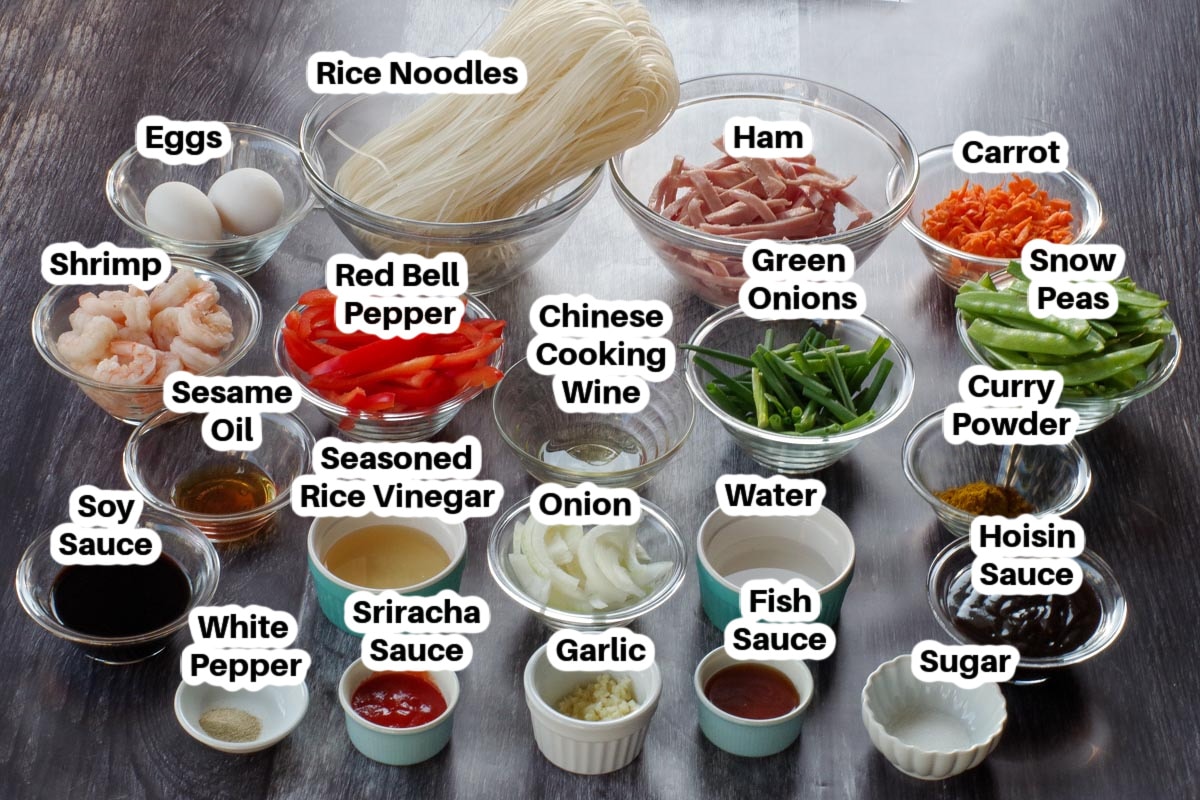
To get that authentic restaurant taste without spending hours in the kitchen, here is what you need to know about the ingredients:
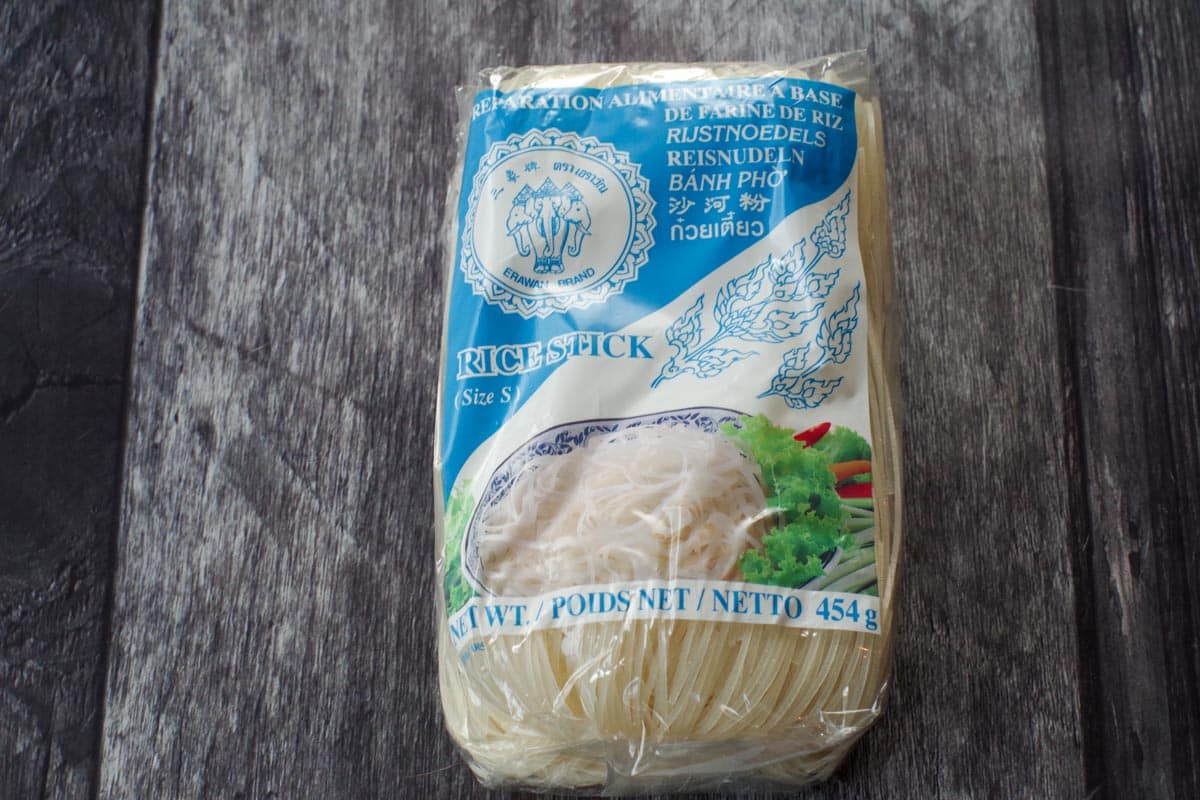
- Rice Noodles: You can use Vermicelli noodles, but they break quite easily while stir-frying. And they may not soak up the sauce as well as the rice stick noodles. If the sauce is too thin, then you can make a cornstarch 'slurry' with cornstarch and water to thicken the sauce. I found that using the actual "Rice Stick" worked much better. That's why this recipe is also called "Singapore Fried Rice Stick," and that is the name on the menu at some Chinese restaurants. Just be sure you get Size S (Small), which is shown on the package (as you see below), or the noodles will be too thick!
- The Protein: Traditional recipes use Char Sui (Chinese BBQ Pork), but since that's not easy to find (and time-consuming to make), cooked ham (with hoisin and fish sauce) is a spectacular shortcut that provides almost the exact same flavor and texture. However, if you can easily get your hands on Char Sui, then it will also work perfectly with this recipe!
- Sesame and Canola Oil: You'll notice this recipe uses a combination of both canola and sesame oil, and there's a reason for that! Canola oil has a high smoke point, which is essential for getting your wok smoking hot to achieve that "restaurant-style" sear without the oil burning. Sesame oil provides that signature nutty aroma and deep Asian flavor we all love. However, because sesame oil has a lower smoke point and can become bitter if it gets too hot, I use it as a "flavoring" alongside the canola oil to give you the best of both worlds: high-heat cooking power and incredible, authentic taste!
- Chinese Cooking Wine (Shaoxing): This adds an essential depth of flavor found in restaurant stir-fries. If you can't find it, dry sherry is a good substitute.
- Fish Sauce & Hoisin: These provide the "umami" base. The fish sauce adds saltiness, and the hoisin provides a hint of sweetness to balance the curry.
- Ground White Pepper: Authentic Chinese cooking uses white pepper for a sharp, clean heat that doesn't speckle the yellow noodles like black pepper would.
*Please see recipe card for full list of ingredients and quantities.
📖Variations & Substitutions
- Vegetarian: To make this vegetarian, omit the shrimp and ham, add tofu, and substitute the fish sauce with extra soy sauce or a vegetarian mushroom sauce.
- Gluten-Free: Use Tamari instead of soy sauce and ensure your hoisin sauce is labeled gluten-free.
- Spice Level: This recipe has a bit of a kick from the sriracha and curry powder. For a milder version, reduce the sriracha to 1 teaspoon. And if you like it hotter, add more sriracha sauce!
- Noodle Types: If you can't find rice sticks, you can use thin angel hair pasta in a pinch, though the texture will be slightly different.
- Chinese Red Vinegar: You will likely have to go to an Asian Market/Grocery to find red vinegar. But for a similar homemade substitute that captures the essence, use 1 tablespoon of unseasoned rice vinegar with 1 teaspoon of light soy sauce, a pinch of sugar, and a pinch of crushed red pepper flakes (red chili flakes).
🔪Step-by-Step: Instructions for Making Singapore Fried Noodles
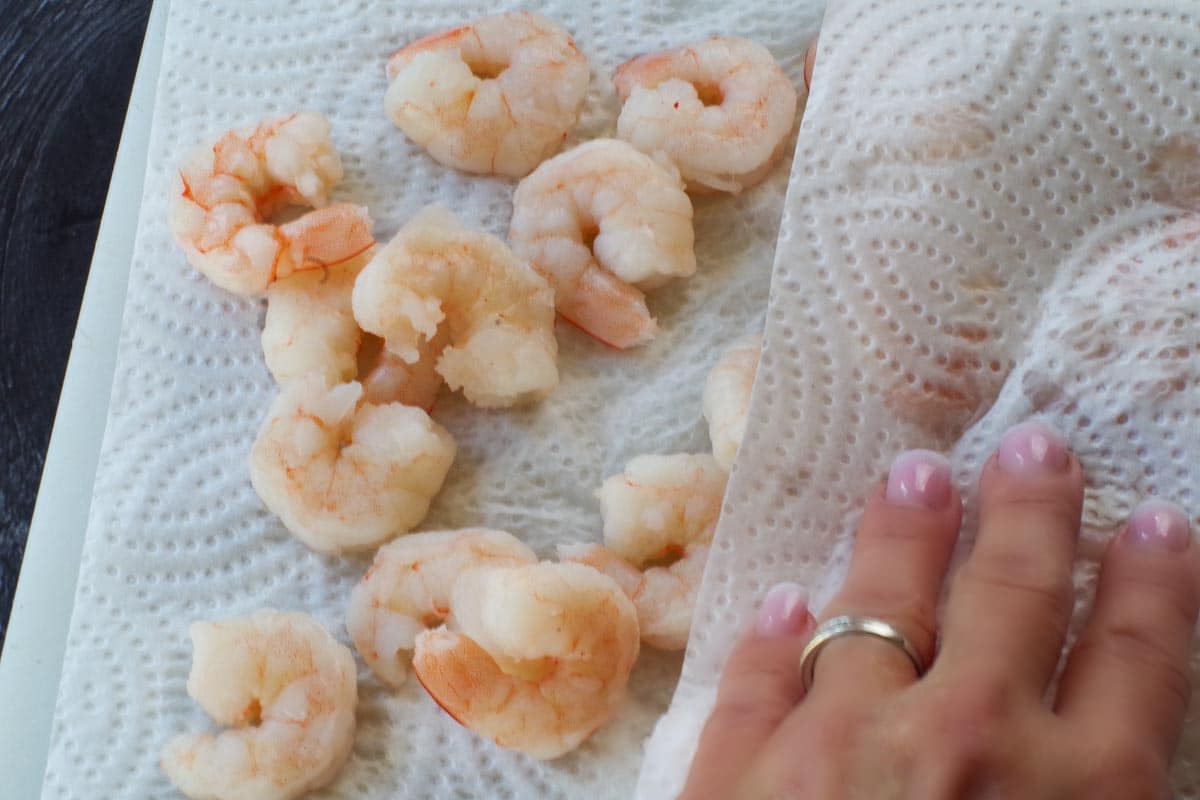
- Step 1: Pat shrimp dry with paper towels. *Remove tails if still attached.
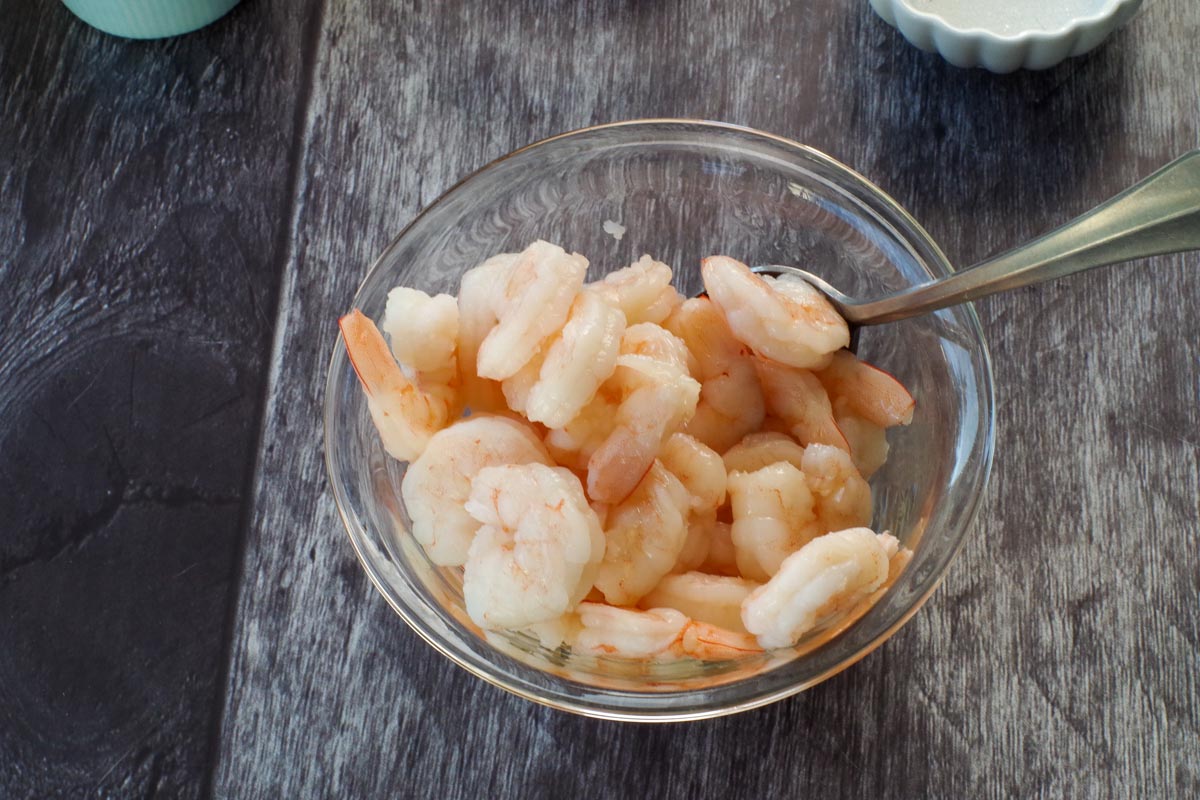
- Step 2: Place shrimp in a small bowl. Add 1 teaspoon of fish sauce and 1 teaspoon of canola oil, and let sit in the fridge.
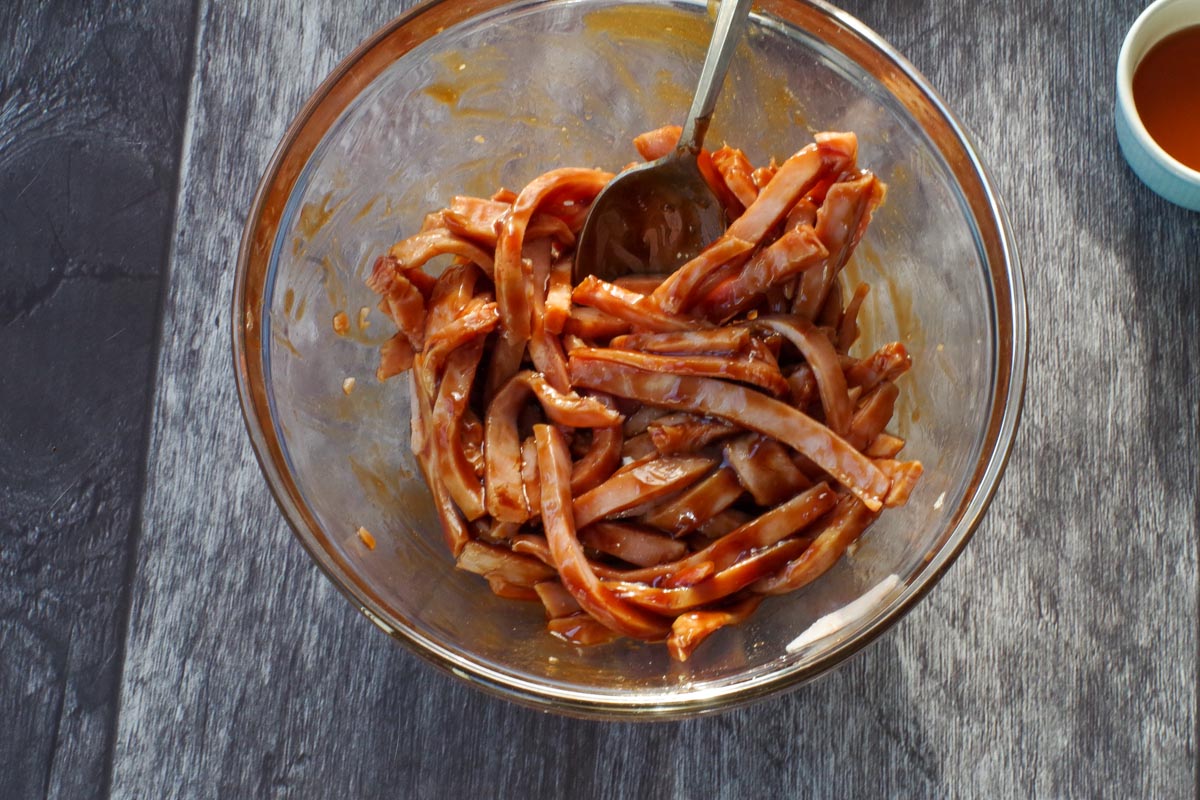
- Step 3: Add ¼ cup hoisin sauce, 1 teaspoon fish sauce, and 1 teaspoon soy sauce to the sliced ham in a bowl and place in the fridge.
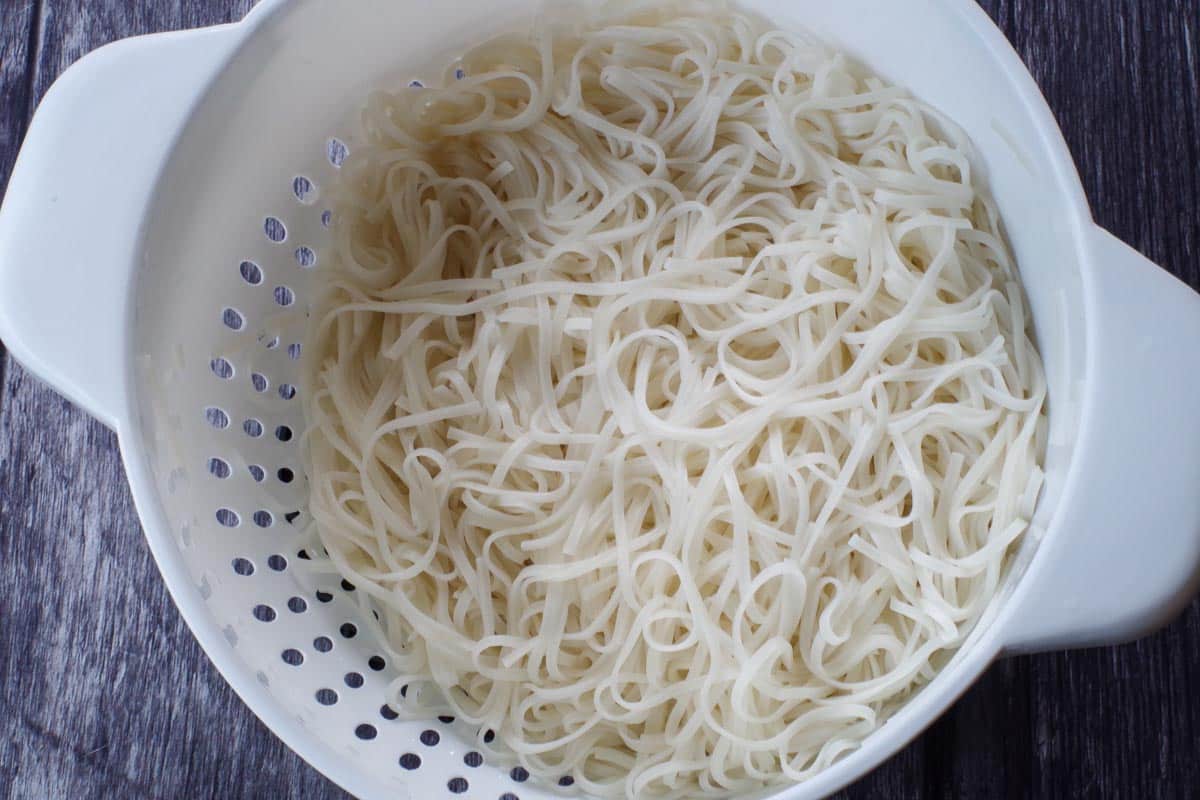
- Step 4: Cook rice noodles per package directions. Some need to be boiled (on a rolling boil for 6-8 minutes), and some types (vermicelli) need to be covered in boiling water for about 5 minutes. Drain noodles in a colander. Rinse with cold water.
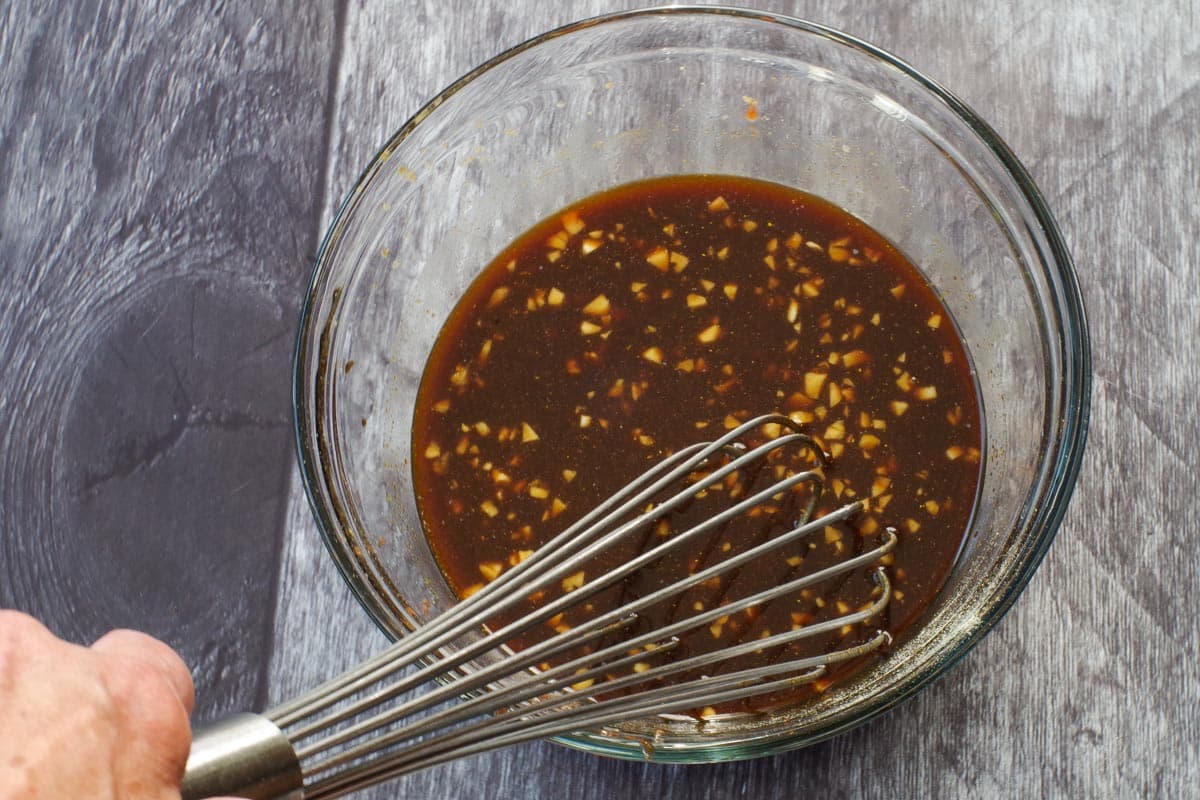
- Step 5: In a medium bowl, whisk together 1 tablespoon curry powder, minced garlic, soy sauce, cooking wine, sriracha sauce, seasoned rice vinegar, remaining hoisin sauce, white pepper, sugar, water and remaining fish sauce.
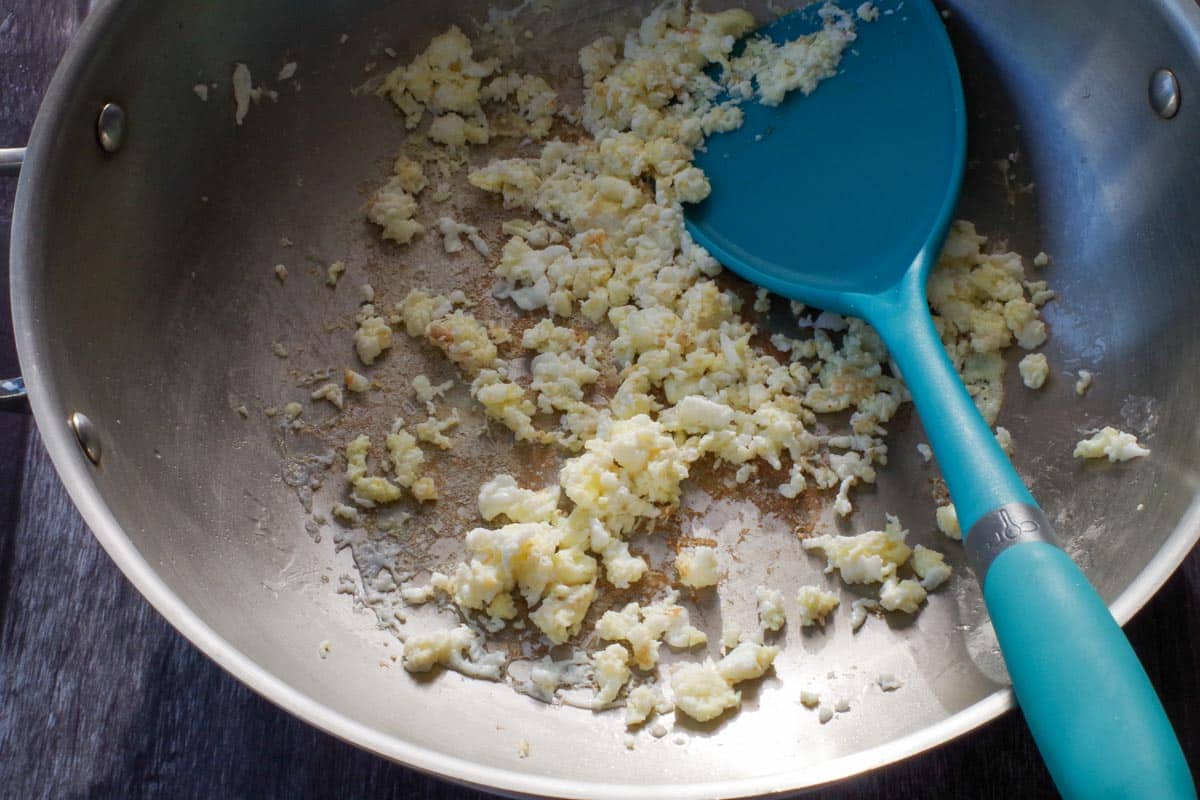
- Step 6: Heat 1 teaspoon canola oil in a wok or nonstick skillet over high heat, tilting to swirl oil, until smoking. Add eggs and let cook undisturbed for about 10 seconds, then gently move the eggs back and forth with a spatula until they start to firm up. Break eggs into small pieces, then set aside in a large bowl.
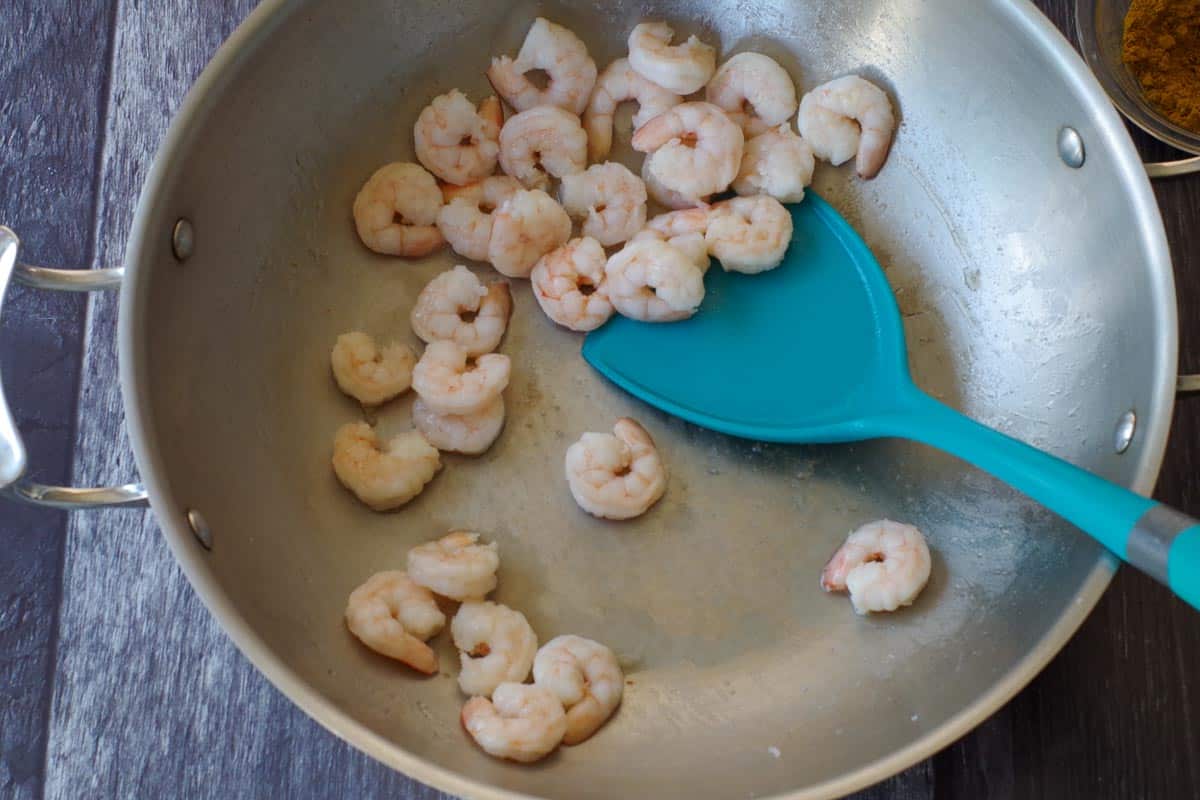
- Step 7: Wipe the wok clean. Return wok to high heat, add 1 teaspoon canola oil and heat until smoking. Add shrimp and stir-fry for 30 seconds. Scrape wok contents into bowl with eggs.
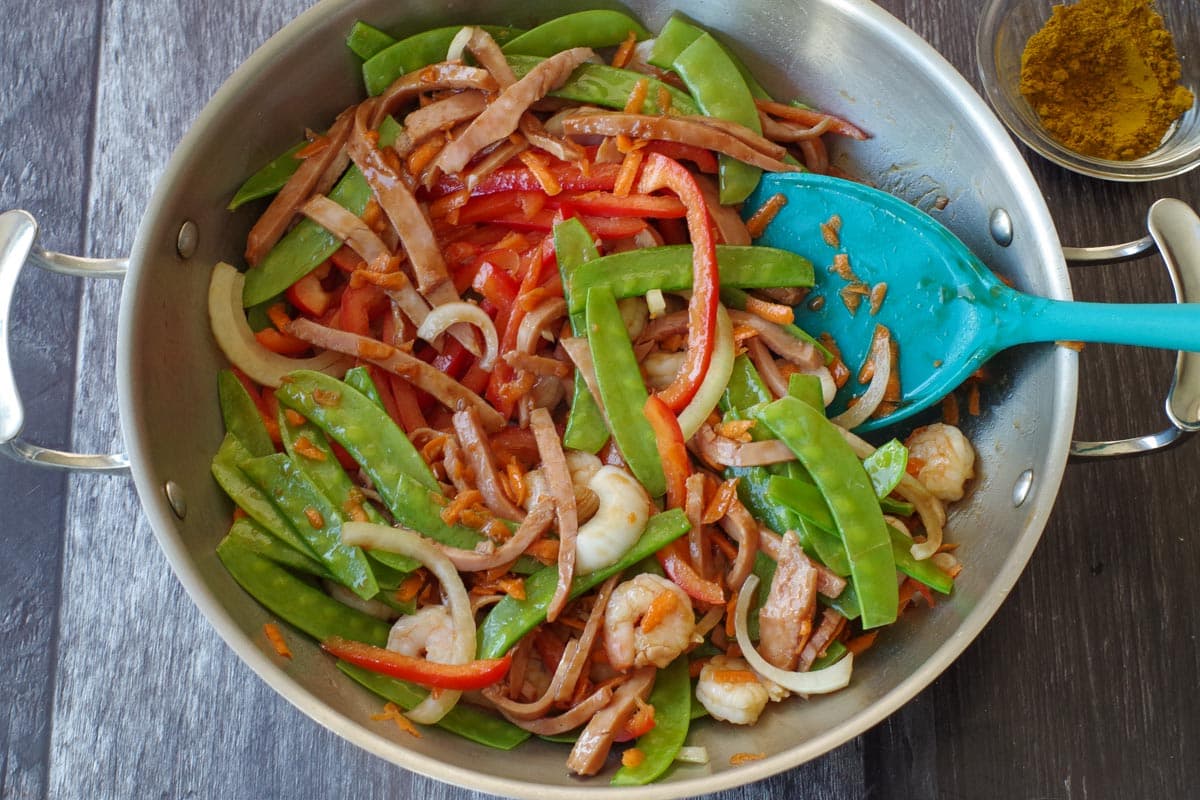
- Step 8: Then add ham and white onion, red bell pepper, snow peas, green onions, 2 teaspoon sesame oil, carrots, and continue to stir-fry for 3 minutes. Scrape into another bowl and set aside.
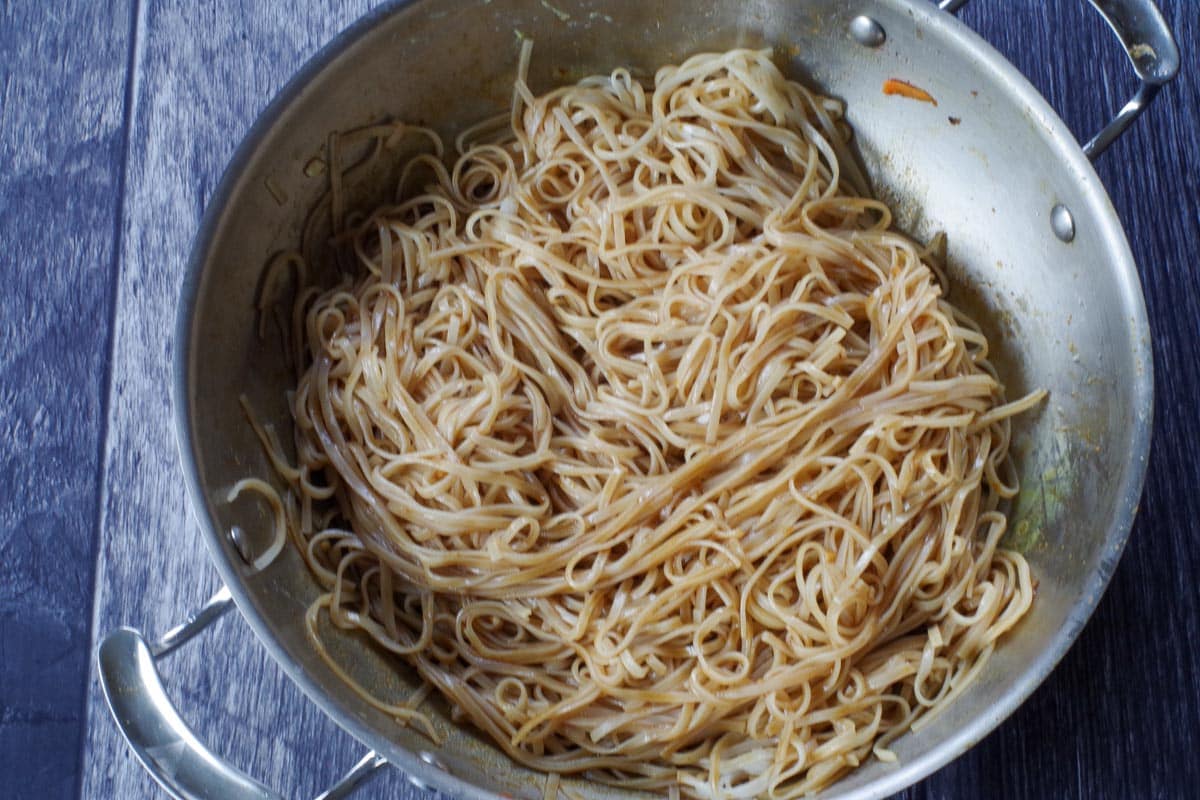
- Step 9: Wipe the wok clean again. Heat the remaining 1 teaspoon canola oil over high heat until smoking. Add rice-stick noodles and stir-fry for 30 seconds. Stir in the sauce until it is evenly distributed.
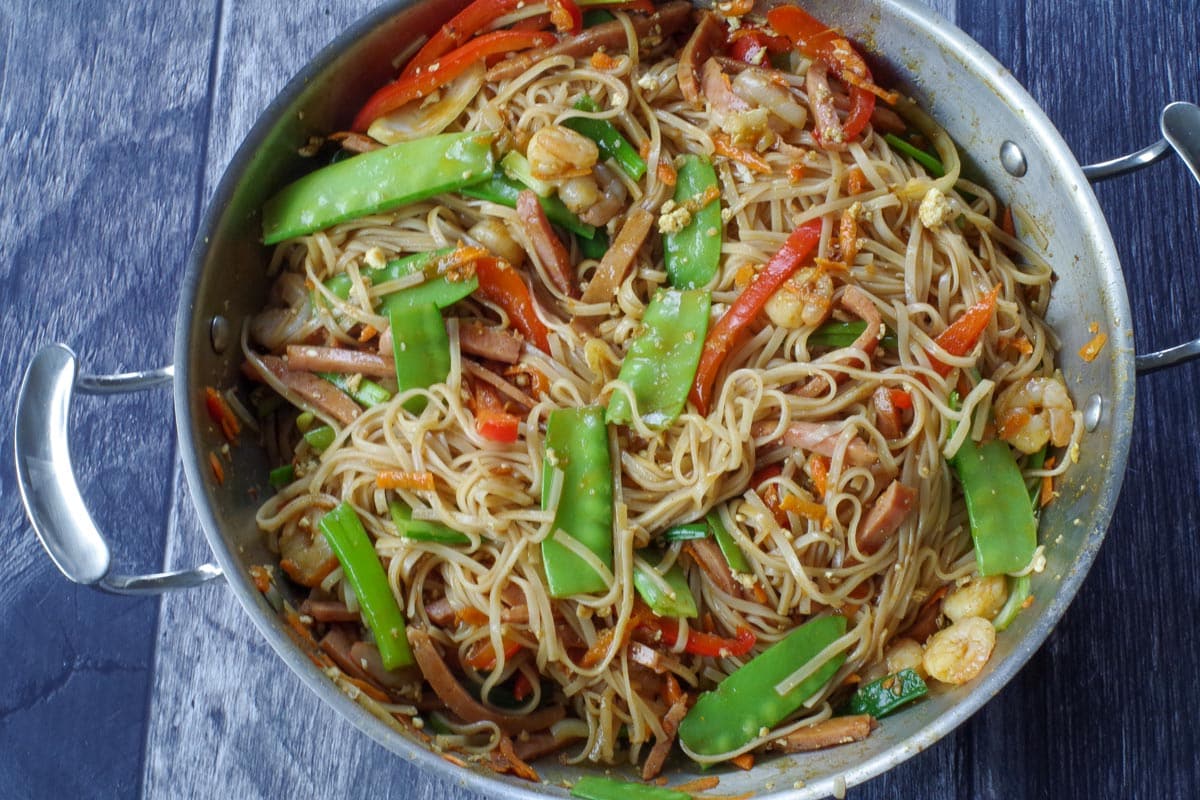
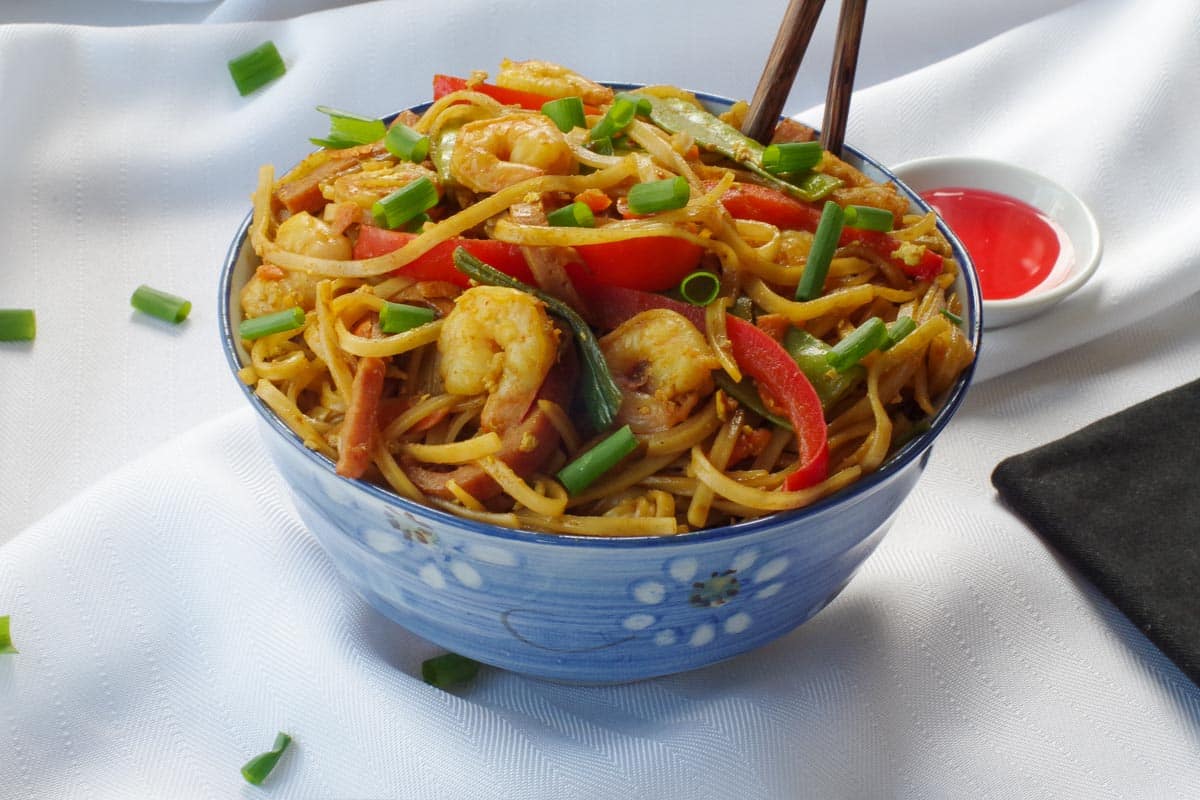
- Step 10: Return egg, shrimp, ham, and vegetable mixture to wok, add remaining 2 teaspoon sesame oil and stir-fry until everything is evenly combined, about 30 seconds. Stir-fry for another minute, then remove from the heat. Transfer to a large serving bowl. Serve immediately. Enjoy!
Expert Recipe Tips
- Prep Everything First: Stir-frying happens at lightning speed! Have all your vegetables chopped, your sauce mixed, and your noodles drained before you even turn on the stove.
- Rinse the Noodles: After cooking/soaking your rice noodles, rinse them under cold water. This stops the cooking process immediately and prevents them from turning into a gummy mess when you add them to the wok.
- Don't Crowd the Pan: We cook the eggs and shrimp separately for a reason. If you add everything at once, the temperature of the pan drops, and the food steams instead of searing.
🌡️Storage & Freezing
Freezing (Not Recommended): I do not recommend freezing Singapore Fried Rice Noodles. Because rice vermicelli is so delicate, the freezing and thawing process often causes the noodles to break and become mushy or "swollen" as they absorb the residual sauce (this is also the same for Rice Stick noodles). If you want that perfect restaurant-style "snap" to your noodles, it's best to eat them fresh or from the fridge!
Fridge: This dish is best enjoyed fresh, but leftovers stay delicious in the fridge for up to 4 days. To keep the noodles from drying out, store them in a tightly sealed airtight container.
Reheating: For the best results, reheat the noodles in a wok or skillet over medium heat with a tiny splash of water or oil. This helps "revive" the texture. While you can use a microwave, a quick stir-fry on the stove prevents the noodles from becoming gummy.
👪 Serving Size
This Fried Rice Noodles Singapore style recipe makes 8 servings at about 1.5 cups each. However, you can half, double, or triple the recipe by clicking on the serving number and selecting the number of servings you'd like. The ingredient quantities will automatically adjust.
🔢WW Points
These Singapore Fried Noodles are surprisingly healthy! Using lean ham, shrimp, and plenty of veggies keeps the points in check. One serving (approximately 1.5 cups) is 7 WW Points. You can lower the points further by reducing the amount of sesame oil used.
Recipe FAQs
Interestingly, this dish is believed to have originated in Hong Kong, not Singapore! It was likely named "Singapore style" to evoke the exotic, spice-heavy flavors associated with the region.
The main difference is the seasoning and the noodle. Singapore noodles are characterized by yellow curry powder and use thin rice vermicelli. Chow Mein typically uses wheat-based egg noodles and a brown savory sauce without curry.
They have a mild-to-medium heat depending on the curry powder and sriracha used. The white pepper also adds a unique warmth. If you are sensitive to spice, start with half the amount of curry and sriracha.
Be gentle! Once the noodles are in the wok, use a tossing motion with a spatula rather than a vigorous stirring motion. This keeps the long rice sticks intact.
Didn't find the answer you're looking for?
Ask AI to answer based on this specific recipe
More Asian-inspired Recipes
Comments & Reviews
Did you know that commenting and⭐rating recipes is one of the best ways to support your favorite recipe creators? If you loved this recipe, please comment and rate it in the recipe card or share photos on social media using the hashtag #foodmeanderings or tagging @foodmeanderings !

Singapore Fried Rice Noodles Recipe
Equipment
- large spatula
Ingredients
- 350 gram bag of cooked frozen shrimp tails removed, shelled, deveined, and rinsed under cold water
- 1 tablespoon canola or vegetable oil divided (1 teaspoon for shrimp)
- 2.5 tablespoon fish sauce divided (2 teaspoon for meat 1 for ham, 1 for shrimp
- 1 package thin rice stick noodles or vermicelli noodles -about 16 oz dried thin rice stick noodles (see Note at bottom of recipe card)
- 3 medium cloves garlic minced
- ½ tablespoon curry powder
- ⅓ cup soy sauce
- ⅓ cup Chinese cooking wine
- ½ cup seasoned rice vinegar
- ⅔ cup hoisin sauce divided -1 /4 cup for ham , remaining in sauce
- ½ teaspoon ground white pepper
- 1 teaspoon sugar
- 2 eggs beaten with two pinches kosher salt
- 2 cups cooked ham - about 4-500 g cut into thin strips
- ½ medium yellow onion very thinly sliced
- 1 medium red bell pepper stemmed, seeded and julienned
- 227 g bag of fresh snow peas stemmed, tough strings removed, and slice thinly on the bias
- 1 large carrot grated
- ½ bunch -4-6 green onions sliced very thinly on the bias and cut in half
- 4 teaspoons sesame oil
- ¼ cup water
- 2 tablespoon sriracha sauce
Garnish (optional)
- green onions
- red rice vinegar

Instructions
- Pat shrimp dry with paper towels and place in a small bowl. Add 1 teaspoon of fish sauce and 1 teaspoon of canola oil and let sit in fridge.
- Add ¼ cup of the hoisin sauce, 1 teaspoon fish sauce, and 1 teaspoon soy sauce to sliced ham in bowl and place in the fridge
- Cook rice noodles per package directions. Some need to be boiled (on rolling boil for 6-8 minutes) and some types (vermicelli) need to be covered in hot water for about 5 minutes.
- Drain noodles in a colander. Rinse with cold water.
- In a medium bowl, whisk together curry powder, minced garlic, soy sauce, cooking wine, sriracha sauce, seasoned rice vinegar, remaining hoisin sauce, white pepper, sugar, water and remaining fish sauce.
- Heat 1 teaspoon canola oil in a wok or nonstick skillet over high heat, tilting to swirl oil, until smoking. Add eggs and let cook undisturbed for about 10 second, then gently move the eggs back and forth with a spatula until they start to firm up. Break eggs into small pieces, then set aside in a large bowl.
- Wipe wok clean. Return wok to high heat, add 1 teaspoon canola oil and heat until smoking. Add shrimp and stir-fry for 30 seconds.
- Then add 2 tsps of sesame oil, ham and white onion, red bell pepper, and stir-fry for about 3 minutes.
- Scrape wok contents into bowl with eggs.
- Wipe wok clean again. Heat 1 teaspoon of canola oil over high heat until smoking. Add rice-stick noodles and stir-fry for 30 seconds. Stir in the sauce until it is evenly distributed.
- Return egg, shrimp, ham, and vegetable mixture to wok, add remaining sesame oil (2 tsps) and stir-fry until everything is evenly combined, about 30 seconds.
- Stirfry for another minute, then remove from heat.
- Transfer to a large serving bowl. Serve immediately. Enjoy!
Notes
- Prep Everything First: Stir-frying happens at lightning speed! Have all your vegetables chopped, your sauce mixed, and your noodles drained before you even turn on the stove.
- Rinse the Noodles: After cooking/soaking your rice noodles, rinse them under cold water. This stops the cooking process immediately and prevents them from turning into a gummy mess when you add them to the wok.
- Don't Crowd the Pan: We cook the eggs and shrimp separately for a reason. If you add everything at once, the temperature of the pan drops, and the food steams instead of searing.
- Vegetarian: To make this vegetarian, omit the shrimp and ham, add tofu, and substitute the fish sauce with extra soy sauce or a vegetarian mushroom sauce.
- Gluten-Free: Use Tamari instead of soy sauce and ensure your hoisin sauce is labeled gluten-free.
- Spice Level: This recipe has a bit of a kick from the sriracha and curry powder. For a milder version, reduce the sriracha to 1 teaspoon. And if you like it hotter, add more sriracha sauce!
- Noodle Types: If you can't find rice sticks, you can use thin angel hair pasta in a pinch, though the texture will be slightly different.
- Chinese Red Vinegar: For a homemade substitute, use 1 tablespoon of unseasoned rice vinegar with 1 teaspoon of light soy sauce, a pinch of sugar, and a pinch of crushed red pepper flakes (red chili flakes).






Dorothy says
Thank you for your recipes. This one didn’t work for me. It took me much longer to prepare and it was so vinegary. Is 1/2 cup of vinegar the correct amount for the sauce? The sauce was so thin I had to continue cooking it for quite a while to reduce the sauce. It also made soo much. I should have judged that better. 16 oz of dried noodles was a lot once cooked! Luckily I had a huge pan.
Terri Gilson says
Hi Dorothy,
Sorry to hear it didn't work out for you. If you found it too 'vinegery' then you can cut the rice vinegar to 1/3 or 1/4. My family likes it like that, so I guess it's just preference. What type of noodles did you use? The thicker rice stick noodles that I recommend should soak up the sauce, but you can always make a cornstarch slurry to thicken it a bit. Hopefully by cutting the rice vinegar and thickening the sauce, you wil enjoy it more next time!
Terri